
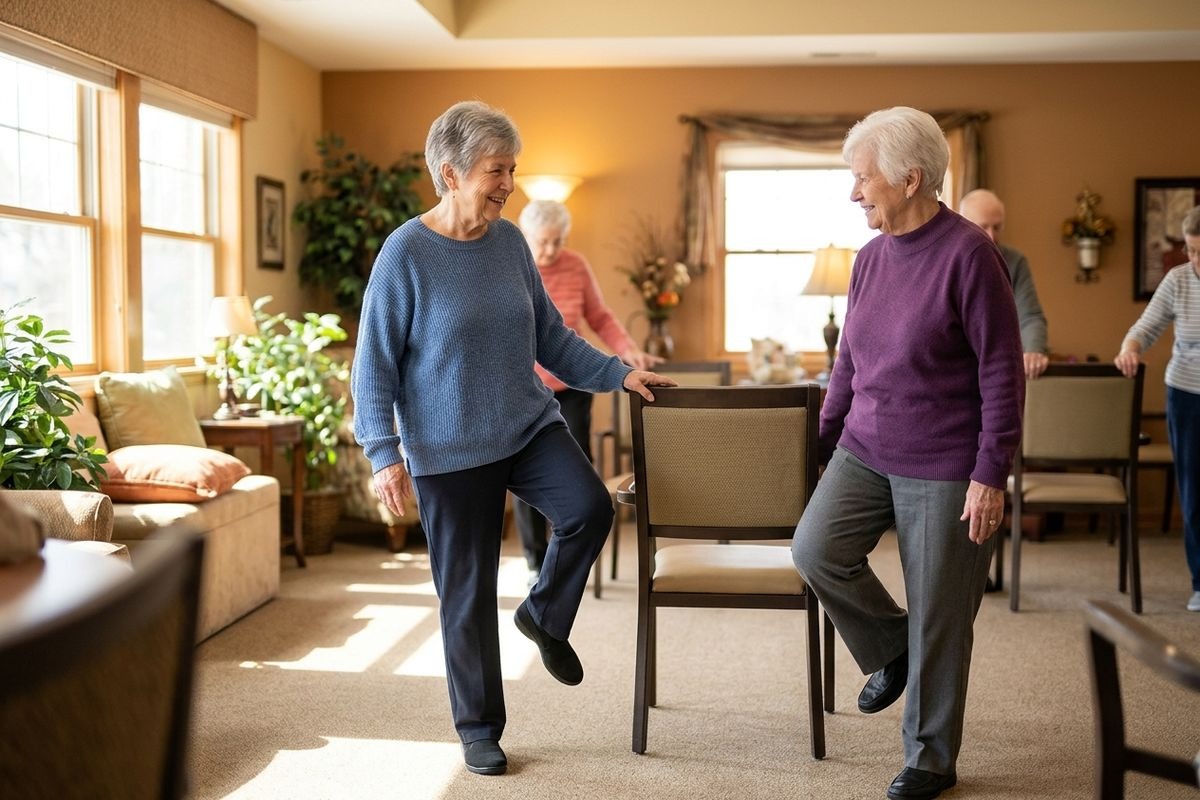
Two smiling older adults do standing leg raises using a chair for balance in a bright community room, with others exercising in the background.
Key Takeaways
- Natural changes in strength and coordination can affect balance as you age.
- Simple exercises like single-leg stands and sit-to-stand movements help build stability.
- Small home adjustments can reduce fall risks significantly.
- Daily habits like short walks and decluttered walkways support steady movement.
- Assisted living communities offer accessible environments and wellness programs that support fall prevention.
Balance, Stability, and Staying on Your Feet
If you’ve ever felt a little unsteady getting up from a chair or noticed that walking on uneven ground feels trickier than it used to, you’re not alone. Balance naturally shifts as the body ages, and it can quietly affect your day-to-day movement.
The good news is that balance can be improved at any age through the right exercises, small lifestyle adjustments, and a supportive living environment. Whether you’re looking out for yourself or a loved one at All American Assisted Living at Warwick, there are real, practical steps that can make daily life feel safer and more comfortable. From personalized assisted living support to simple at-home habits, the right approach can make a meaningful difference.
Why Balance Matters as You Age
Over time, changes in muscle strength, coordination, and even vision can make it harder to stay steady on your feet. These shifts are a normal part of aging, but they do raise the risk of falls, which are among the most common causes of injury in older adults. A single fall can lead to weeks of recovery and a loss of independence.
Good balance supports so much more than just walking. It plays a role in getting dressed, climbing stairs, reaching for items on shelves, and simply moving through your day with ease. When balance improves, everyday tasks feel less daunting, and you can stay active in the ways that matter most to you.
Common Causes of Falls in Older Adults
Physical and Health Factors
Weak leg muscles and poor coordination are 2 of the most common physical reasons behind falls. When leg strength declines, it becomes harder to catch yourself if you stumble. Vision changes can also affect how well you judge distances and spot uneven surfaces.
Certain medications can cause dizziness or affect your sense of steadiness, too. If a loved one takes multiple medications, it’s worth reviewing them with a healthcare provider to understand any potential effects on balance and movement.
Home and Environment Hazards
Many falls happen right at home, often in spots you’d least expect. Dim lighting, loose rugs, and cluttered pathways are frequent culprits. Bathrooms are especially high-risk, and nighttime trips through dark hallways add another layer of challenge.
A few simple home modifications, like adding nightlights, securing rugs, and installing grab bars near the toilet and shower, can go a long way toward reducing these risks. For more guidance on responding when a fall does happen, this helpful resource on what to do after a fall walks you through the steps.
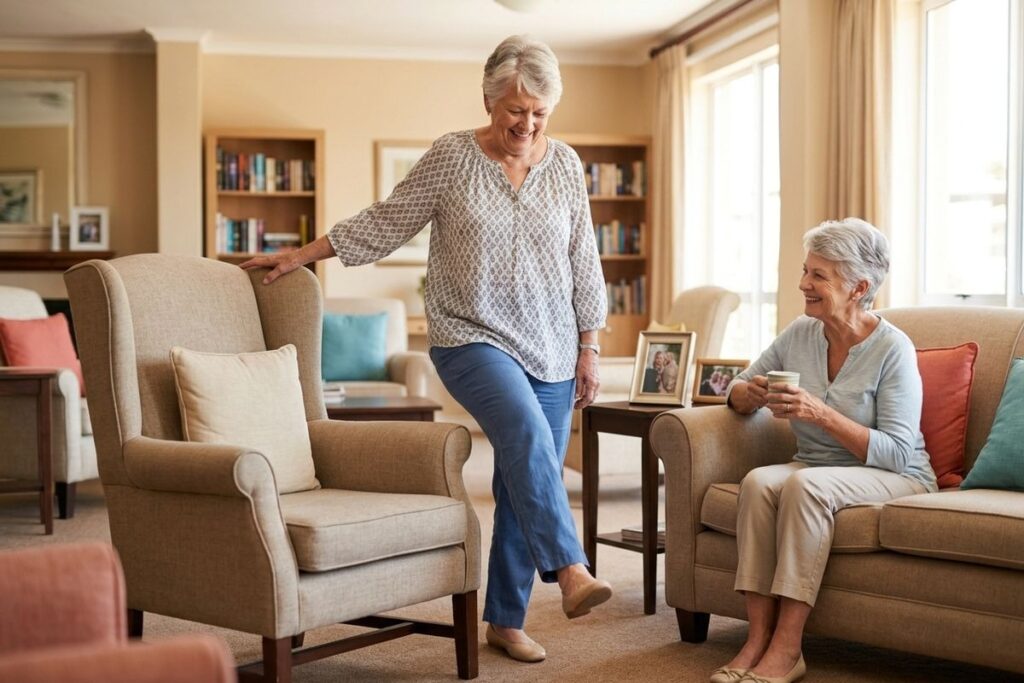
Two older adults laugh together in a warm living room; one stands balancing on their foot while the other sits on a sofa cradling a mug.
Simple Balance and Strength Exercises to Try
Exercises for Better Balance
You don’t need a gym or special equipment to work on balance. Try standing on 1 foot while holding a sturdy chair for support, or practice heel-to-toe walks along a straight line. These movements challenge your stability in a safe, controlled way.
Gentle weight shifts from side to side help train your body to adjust its center of gravity. Slow head rotations, where you turn your head left and right while standing still, can also improve coordination between your eyes and body. You can explore a full set of balance exercises for older adults to build a well-rounded routine.
Exercises for Leg Strength
Strong legs are the foundation of good balance. Sit-to-stand movements, where you rise from a chair and sit back down slowly, are a great place to start. They build lower body power using your own body weight with no equipment needed.
Standing heel raises and standing marches are also simple and effective. Start with just a few repetitions and gradually add more as you feel stronger. Taking it slow and steady leads to real progress over time. If joint discomfort is a concern, gentle workouts designed for seniors with arthritis offer a great starting point.
Everyday Habits That Support Steady Movement
Consistency matters more than intensity when it comes to balance. Pairing your exercise days with short daily walks helps keep your legs active and your coordination sharp. Even a 10-minute stroll around the neighborhood can make a difference, and fall prevention strategies work best when they become part of your everyday routine.
At home, take a moment to clear walkways of clutter and make sure frequently used areas are well-lit. Exercising with a friend or joining a group class adds a social element that keeps you motivated and adds an extra layer of safety during your routine.
How Assisted Living Supports Fall Prevention
A Safe and Supportive Environment
Senior living communities are thoughtfully designed with safety in mind. Accessible layouts, wider hallways, and well-placed grab bars all encourage independent movement without added risk. Wellness programs built into daily life can help residents strengthen their bodies consistently and comfortably.
Personalized Care for Every Lifestyle
Compassionate caregivers are available to offer extra support whenever it’s needed, whether that means help with daily tasks or simply a steady hand. Respite care and assisted living options can be tailored to fit a wide range of needs, so there’s a path forward for every situation.
Memory care is also available for those who need more focused support, with a calm, structured environment that prioritizes safety and connection every day.
Find the Right Support at All American Assisted Living at Warwick
At All American Assisted Living at Warwick, the focus is on helping residents stay active, safe, and connected. From wellness programs and accessible design to personalized care and a warm community atmosphere, everything here supports a fulfilling daily life. Come take a tour and see what life can look like when the right support is in place.