
Key Takeaways
- Pet therapy offers guided interactions between seniors and trained animals, often led by a handler or therapist
- Animal-assisted activities can lift mood, ease loneliness, and support emotional well-being
- Physical benefits include improved motor skills and lower stress-related blood pressure
- Pet therapy can be especially meaningful for those in memory care settings
- Senior living communities can offer wellness programs that include enrichment activities like pet therapy
The Real Power Behind a Paw and a Friendly Face
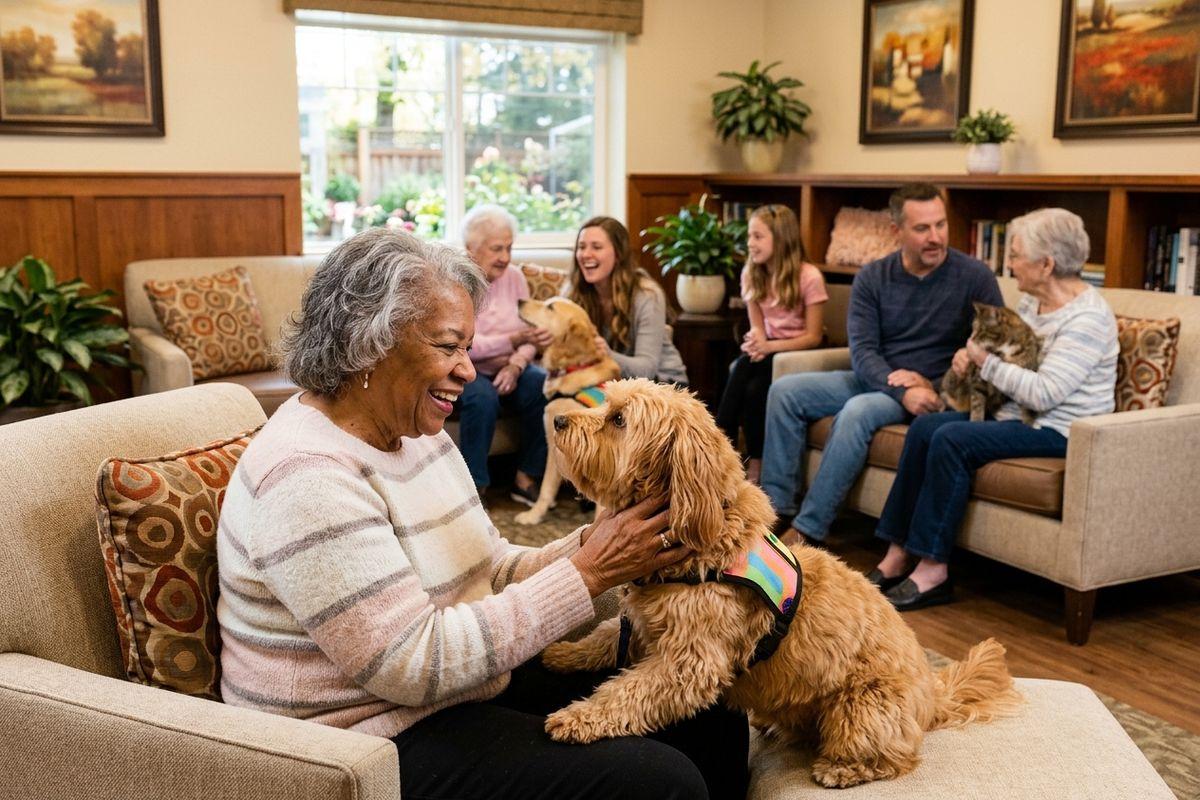
There is a quiet magic in the moment a senior reaches out to pet a gentle dog or feels a cat settle warmly into their lap. It’s a simple interaction, but it can brighten an entire day.
At All American Assisted Living at Warwick, we see firsthand how deeply these small connections resonate in daily life. Whether your loved one is in assisted living, memory care, or a short-term respite stay, animal companionship can offer meaningful comfort.
Pet therapy can offer a beautiful spectrum of benefits—from soothing loneliness and providing emotional comfort to encouraging gentle physical movement and mental stimulation.
It’s a natural, joyful way to elevate your loved one’s well-being and bring a smile to their routine.
What Is Pet Therapy?
Pet therapy is more than a casual visit from a friendly dog. It involves structured, guided interactions between seniors and trained animals, typically supported by a certified handler and, in some cases, a therapist.
The goal is to promote emotional, physical, or cognitive well-being in a way that feels natural and enjoyable.
Dogs and cats are the most common therapy animals, but some programs use rabbits, birds, or even miniature horses. Each session is tailored to what works for the senior involved. It’s a thoughtful, personal experience, not a one-size-fits-all program.
Research on the benefits of pet ownership for seniors shows just how powerful these animal connections can be for overall health.
The Emotional and Mental Health Perks
A Natural Mood Boost
When your loved one spends time with a friendly animal, something shifts in the brain. Interacting with animals triggers feel-good chemicals that naturally lift the spirit and ease tension. It’s the power of connection in one of its most uncomplicated forms.
Playful, calm animals have a way of bringing genuine smiles to people who may have been struggling that day. That simple moment of joy matters more than it might seem.
In senior living settings, those moments can become some of the most anticipated parts of the week. Communities that prioritize mental health support for seniors often see the biggest impact from programs like these.
Less Loneliness, More Connection
Loneliness is one of the more difficult challenges that older adults face, especially during times of transition. Therapy animals offer something that can fill that gap. Their warmth and presence make a person feel seen and valued without words.
For seniors who may find social situations tiring or emotionally complex, an animal’s companionship can feel far less demanding and just as meaningful. Social isolation in older adults carries real health consequences, which is why connection, in any form, matters so much.
It’s connection without pressure, and that can go a long way toward improving overall emotional health.

Physical Health Benefits Worth Knowing
Movement and Motor Skills
Petting, brushing, or gently tossing a toy for a dog requires small, intentional movements that can strengthen coordination and fine motor skills over time.
These activities may seem minor, but for seniors who experience stiffness or limited mobility, they offer a gentle and enjoyable way to stay physically engaged.
Some programs even involve short walks with therapy dogs, which encourages light exercise in a way that feels more like fun than a workout. Movement paired with joy tends to be the kind that people actually look forward to.
Pairing pet therapy with other low-impact activities for seniors can create a well-rounded, joyful daily routine.
Blood Pressure and Pain Relief
Time spent with a calm, friendly animal can lower stress-related blood pressure. The soothing rhythm of petting an animal can relax the body in a way that’s hard to replicate with other activities. It’s a natural, gentle kind of relief.
For seniors who experience chronic discomfort, the calming presence of a therapy animal can also help ease the perception of pain. When the mind feels at ease, the body often follows.
How Pet Therapy Supports Memory Care
For those living with memory-related conditions, pet therapy can be a particularly meaningful tool.
Familiar animals, especially dogs or cats that remind someone of a beloved pet from years past, can spark memories that had seemed out of reach. Those moments of recognition are incredibly precious for both the senior and their family.
Simple tasks like brushing a dog’s coat or offering a treat can gently engage cognitive function in a low-pressure, joyful way. And when anxiety or distress arises during difficult episodes, the grounding presence of a calm animal can help redirect and soothe those feelings.
Learning more about memory care support can help families understand how programs like pet therapy fit into a broader care approach.
How to Know If Pet Therapy Is a Good Fit
Things to Consider First
Every senior is different. Allergies, past experiences with animals, or personal preferences all play a role in whether pet therapy feels like a welcome activity or an uncomfortable one. Have a conversation with your loved one before assuming it’s the right fit.
A good care team will always take those factors into account and adapt the experience accordingly. The goal is comfort and joy, never pressure.
What a Strong Senior Living Program Looks Like
When you’re exploring senior living options, ask about the enrichment programs on offer. Communities that prioritize wellness tend to include animal-assisted activities as part of a broader, person-centered approach to daily life.
It’s a sign that the community values joy, not just physical care.
During a community tour, don’t hesitate to ask how pet therapy fits into the activity calendar and how it’s tailored to residents with different needs. Those details reveal a lot about how a community truly cares for the people who call it home.
A Life With More Joy Starts Here
At All American Assisted Living at Warwick, the little moments matter deeply. From enriching programs to compassionate, personalized care, every detail here is designed to support your loved one’s happiness and well-being.
Pet therapy is just one of the many ways that residents can feel connected, engaged, and genuinely at home.
If you’d like to see what daily life here looks like, reach out to schedule a tour. There’s nothing like experiencing the warmth of this community in person, and the team would love to welcome you.